Fogging, Fognet (Fogging Under Netting) To Mitigate Heat Stress (Season 2024)
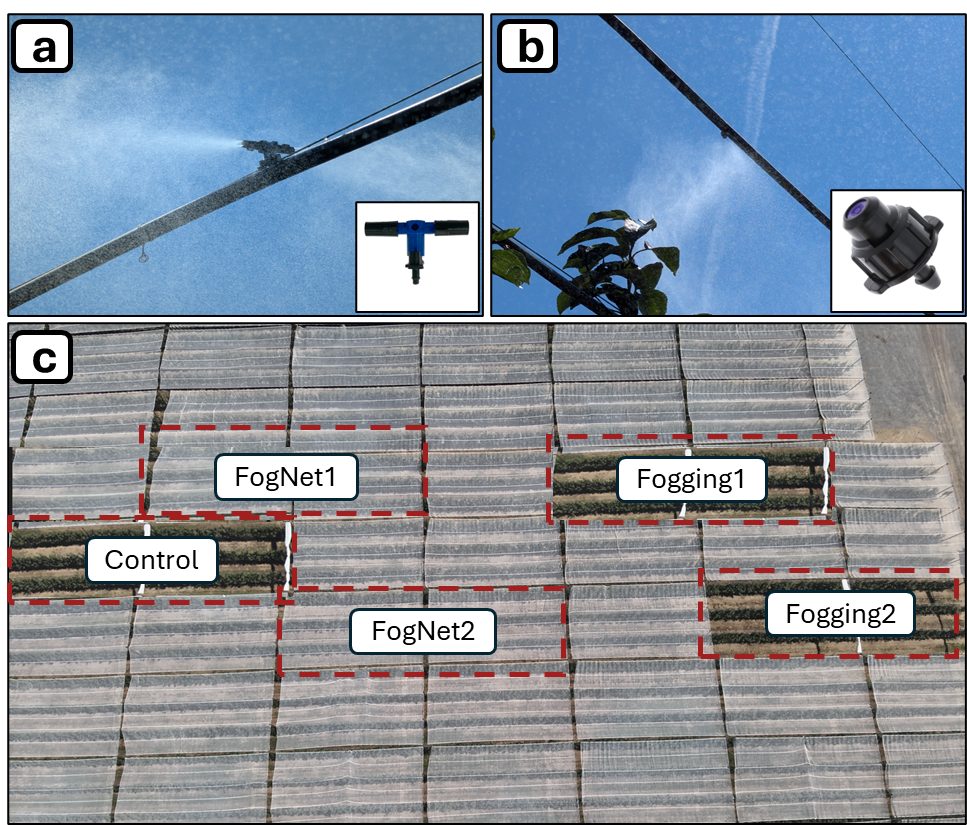
In part of block 2, WSU team is also conducting research to evaluate two different fogging systems that use either a two-way (F14TGS2HP, Jain by Rivulis; flowrate: 4 GPH; operating pressure: 40 PSI; spacing 14 ft) or one-way (50-500-20, DIG Corp.; flowrate: 2 GPH; operating pressure: 40 PSI; spacing 7 ft) nozzles installed in a diamond pattern on the overhead irrigation line (diameter: 0.75 inch). To better understand the netting performance, combination of netting and fogging systems has also been implemented. Untreated control with no cooling or netting has been used to contrast the pertinent results.
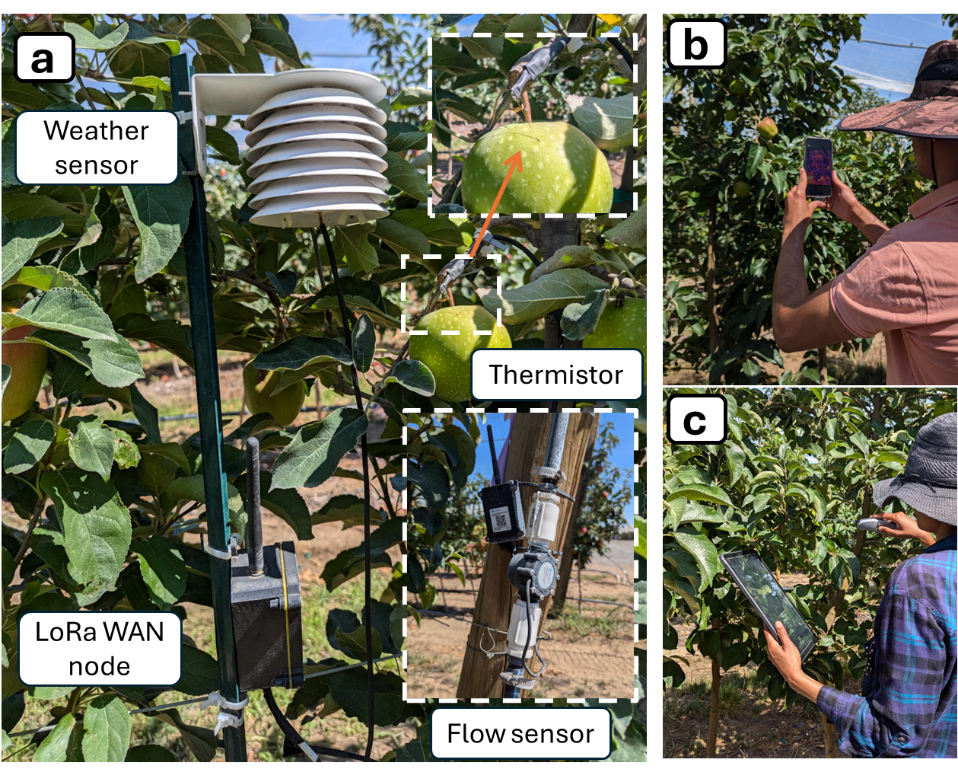
In season 2024, the fogging treatments are being actuated manually in a 20-minute ON and 40-minute OFF cycle during summer days with fruit surface temperatures exceeding the thresholds 101 °F. Sensor nodes installed in the middle row of each treatment quantify to fruit surface and air temperature. Each sensor node consists of a thermistor (ST-200, Apogee Instruments Inc.) and air temperature and relative humidity probe (ATMOS 14, Meters Group) as shown in figure below. These sensor nodes are integrated into the deployed WSN. Data is being collected at 5-minute interval. Thermistor inserted at 2-mm under the fruit skin provides real time fruit surface temperature. Air temperature and relative humidity probe installed at 5 ft AGL to quantify the effectiveness of fogging systems. Similarly, to quantify the cumulative water use in each treatment, in-line flow meters have been installed on respective irrigation lines.
Ground Truthing
To evaluate the fogging systems, periodic (30 minutes) manual measurements were taken using a contact temperature probe (Thermapen Blue, ThermoWorks Inc.) and non-contact thermal-infrared imager (One Edge pro, FLIR Systems, Inc.) (Figure below). Contact temperature probe quantifies fruit surface temperature (FST), and non-contact thermal-infrared imager quantifies FST and canopy temperature. These measurements were taken in all the treatments on selective heat events (five days) throughout 2024 summer season. Moreover, to assess the effect of cooling treatments on yield (fruit count and weight per tree) and fruit quality parameters, five randomly selected trees per treatment were harvested at starch content index 2. The fruit quality was quantified by visually assessing the incidence of various disorders, including necrosis, photooxidative sunburn, browning, early sunburn, and green spot.
Significant findings: Data is being analyzed and pertinent results will be reported soon.